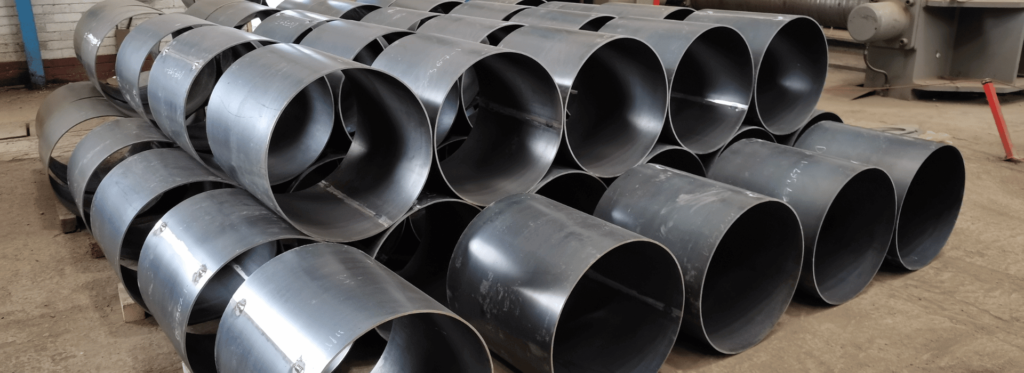
Flat Plate In, Cylinders Out: How Plate Rolling Works

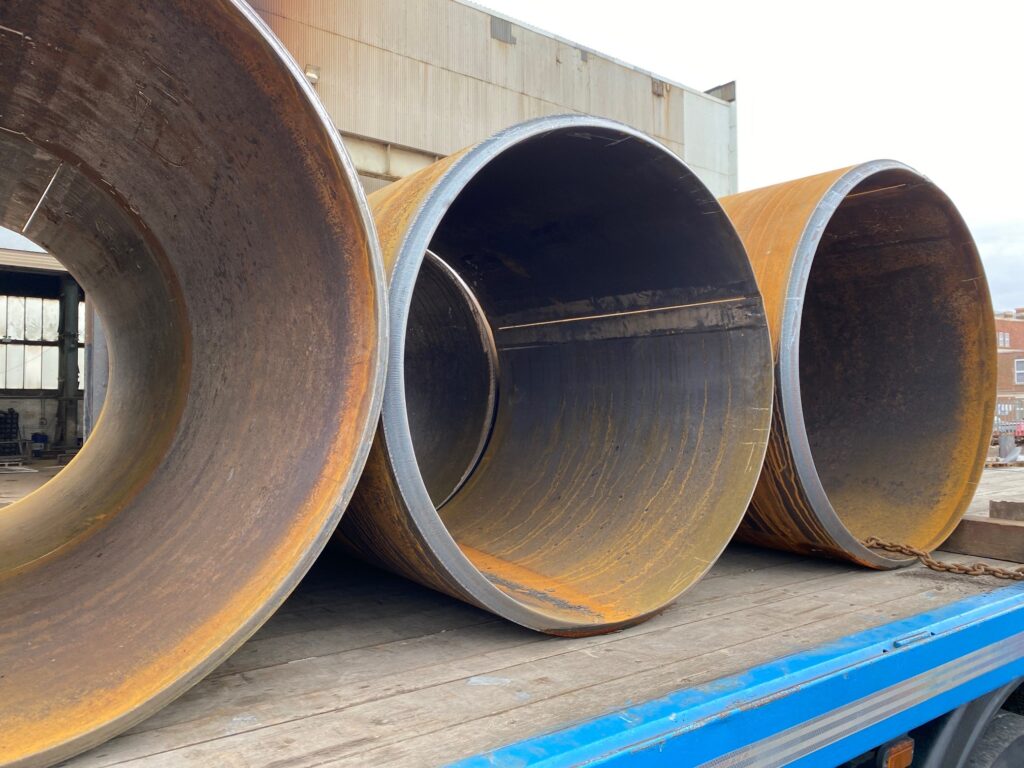
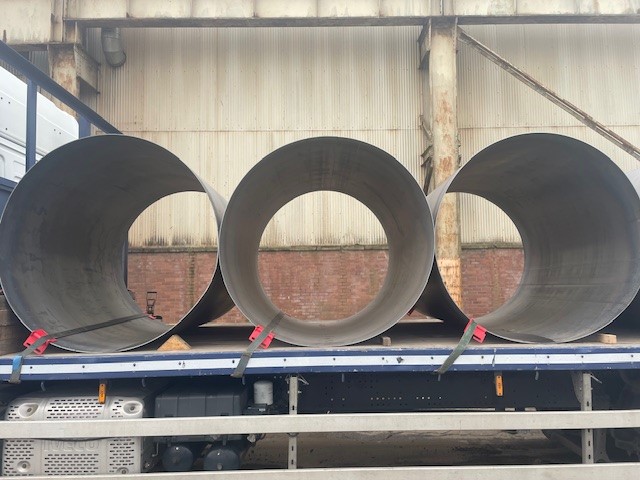
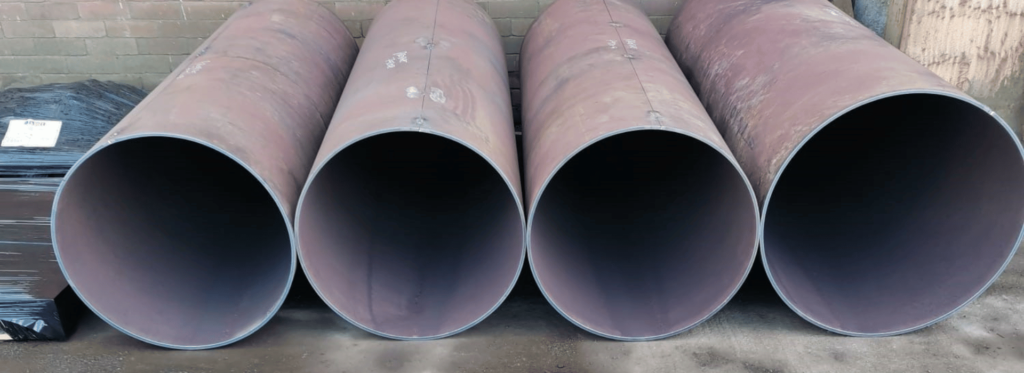
A flat plate goes into the machine, and a cylinder comes out. It looks simple from the outside, but getting it right takes the right equipment, knowledge of materials and years of experience.
At SM Thompson, we've been carrying out steel plate rolling for 25 years. From our site in Middlesbrough, we use a range of rolling machines to produce parts to customers' drawings, from lighter curved sections in thinner plate to heavy cylinders and cones up to 110mm thick.
What is plate rolling?
Plate rolling forms flat steel plate into a curve by passing it through a set of rollers. The plate isn't bent in one go. Pressure is applied gradually as the plate moves through the machine, with the rollers closing in on each pass until the required radius or diameter is achieved.
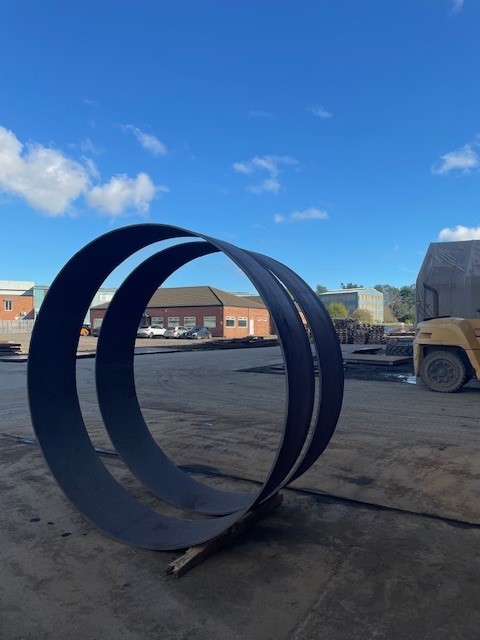
The finished result can be a gentle arc, a full cylinder, a cone or a more complex curved shape.
Our rolling machines: the right rolls for the job
No single machine suits every job. Thick, wide plate needs power and control, while thinner plate rolled to a tight diameter needs a different set-up. That's why we run a range of plate rolling machines, allowing us to match the equipment and process to the job.
Our capabilities include:
Four-roll CNC plate rolling for our heaviest and widest work. Four rollers control the plate throughout forming, while CNC control helps produce accurate and repeatable results across a batch. The machine can also pre-bend both ends of the plate.
Variable geometry rolls, which are well suited to thinner materials and smaller diameters.
We also roll sections — flat bar, angle, channel, tube, box section, beams and columns. More on section rolling.
Why is pre-bending important?
When a flat plate is rolled, the leading and trailing edges tend to stay straight. Without pre-bending, this can leave flat spots at each end of the finished cylinder, which can make fit-up and welding more difficult.
Our four-roll CNC machine can pre-bend both ends as part of the rolling cycle, helping to produce a more consistent shape all the way around the finished component and reducing the need for additional work afterwards.
What we can roll
We roll a wide range of shapes and materials to suit customer drawings and requirements.
Shapes: cylinders, cones, arcs and curved sections, tapered sections, rolled shells and bespoke parts to drawing.
Materials: mild steel, stainless steel, aluminium, high strength steel, wear resistant steel and boiler plate.
Capacity: up to 65mm thick at widths up to 3,000mm, and up to 110mm thick on shorter lengths, depending on the material, diameter and dimensions.
Every job starts with understanding the thickness, grade, dimensions and finished radius required. Different grades behave differently under pressure, so working out the correct rolling requirements before the plate goes into the machine is an important part of getting the finished shape right.
Weld preparation and bevel cutting before rolling
For many rolled components, the work doesn't stop once the plate has been formed. If the finished cylinder, cone or shell is going to be welded, getting the edges prepared correctly before rolling can save time later.
We can cut weld preps and bevels into the plate before it goes through the rolling process, producing the edge profile required for the finished component. This can include bevelled edges, chamfers and other preparation to suit the customer's drawing and welding requirements.
Preparing the plate while it is still flat makes it easier to achieve accurate and consistent edge preparation before forming. Once rolled, the prepared edges are ready for the next stage of the customer's process.
More than just plate rolling
One of the advantages of having multiple processes under one roof is that we can take care of more of the work before the plate reaches the rolling machine.
Alongside plate rolling, we offer:
Laser cutting up to 30mm
Plasma cutting up to 60mm
Flame cutting up to 350mm
Drilling, tapping and countersinking
Press braking and steel bending
This means we can profile the plate, add holes and features, carry out weld preparation and then roll it to the required diameter or radius.
Material can also come from our own steel stock, giving customers the option to have the material supplied and processed here at SM Thompson.
It's all part of our aim to be your Complete Engineering Partner — bringing steel stock, profiling, preparation and bending together under one roof.
Talk to us about your job
Plate rolling takes the right machine, a good knowledge of materials and plenty of experience. We've built all three over 25 years of plate rolling.
Whether you need a simple rolled section or a component that needs profiling, holes, weld preps and rolling, send us your drawing or dimensions and our team in Middlesbrough will talk it through with you.
From Steel Stock, to Profiles, to Bending. Over 75 years of engineering excellence.
 sales@smthompson.co.uk
 01642 245161